Unlocking the Authentic Charm of Hollowcoves Handwritten Display Font
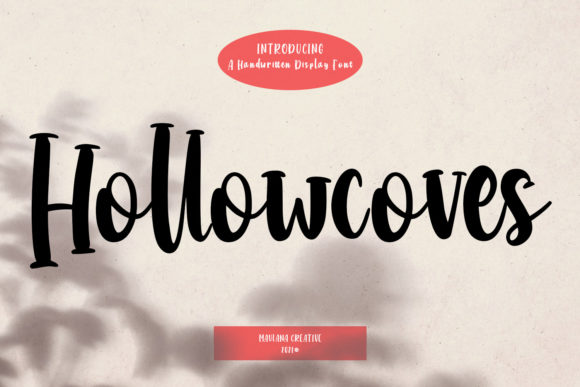
In the crowded digital landscape of today, where sans-serifs and rigid geometric typefaces dominate, finding a font that offers genuine human connection can feel like a breath of fresh air. Hollowcoves is exactly that—a handwritten display font designed to bridge the gap between digital precision and analog warmth. It is a typeface that captures the fluidity of natural handwriting, making it an ideal choice for logo design, social media graphics, movie titles, and book covers. However, the very characteristics that make Hollowcoves so visually appealing—its organic curves and distinct personality—also present specific challenges. If used incorrectly, what was meant to be a unique brand identifier can quickly become a visual liability.
The Allure and the Pitfall of the "Handwritten" Label
There is a common misconception among creators and business owners that any font labeled "handwritten" is inherently casual or amateurish. Conversely, many assume that such fonts can be used universally without any typographic adjustments. Hollowcoves defies both of these assumptions. While it is indeed a handwritten display font, it possesses a level of sophistication and structure that allows it to function in professional contexts, such as high-end branding or cinematic titling.
The mistake often lies in how people apply it. A frequent error is using a display font like Hollowcoves for body text. Because it is designed for impact and headlines, the intricate details of its letterforms can cause eye strain when used in small sizes for long paragraphs. Imagine reading a 500-word blog post entirely in Hollowcoves; the visual noise would be overwhelming, and the message would be lost. The better approach is to treat Hollowcoves as the "voice" of your headline, paired with a clean, legible sans-serif or serif font for the supporting text. This contrast not only ensures readability but also highlights the unique qualities of the display font.
Spacing: The Silent Killer of Handwritten Typography
One of the most overlooked technical aspects of working with display fonts is letter-spacing (tracking). Because Hollowcoves mimics the natural flow of a pen, the default spacing is often optimized for a specific rhythm. However, when designers scale the font up for a movie title or a book cover, the negative space between characters can sometimes feel imbalanced.
A common mistake is leaving the tracking at its default setting for all sizes. When Hollowcoves is used in large formats, such as a hero section on a website, the letters might appear too tight or too loose, disrupting the visual flow. For example, if you are designing a logo, you must manually adjust the kerning—the space between specific pairs of letters—to ensure that the "H" and the "o" or the "o" and the "v" connect harmoniously without overlapping awkwardly.
The Corrective Step: Always zoom in on your design. If you are using Hollowcoves for a title, try increasing the letter spacing slightly (by 10-20 units) to let the letterforms breathe. This small adjustment can transform the text from looking cramped to looking elegant, giving your design a polished, professional finish.
Color, Contrast, and Context
Another area where creators stumble is color theory. Hollowcoves has a strong personality; it is expressive and energetic. Pairing it with overly complex backgrounds or low-contrast colors can render the text unreadable. A frequent scenario involves placing Hollowcoves over a busy photograph for social media posts. The intricate lines of the font get lost in the texture of the image, resulting in a muddled appearance.
Consider a scenario where a small business owner creates a flyer. They love the look of Hollowcoves but place white text over a light-pastel background. The visibility plummets, and the message fails to communicate. The solution is not to abandon the font but to introduce a hierarchy. Use a solid overlay, a drop shadow (used sparingly and modernly), or a text box to separate the typography from the background.
Furthermore, context is king. While Hollowcoves is versatile, it has a distinct vibe. It works exceptionally well for lifestyle brands, wedding invitations, indie movie posters, and artisanal product packaging. However, if you are designing for a corporate law firm or a medical institution, the handwritten nature might undermine the sense of authority required. Understanding the emotional resonance of the font ensures you are making the right decision for your specific audience.
Pairing and Versatility: Beyond the Basics
Choosing the right partner for Hollowcoves is critical. A common error is pairing a decorative handwritten font with another decorative font. This creates a "visual shouting match" where neither font can be read easily. Instead, Hollowcoves demands a quiet partner.
- For Modern Minimalist Designs: Pair Hollowcoves with a clean sans-serif like Montserrat or Lato. The geometric simplicity of the sans-serif allows the organic nature of Hollowcoves to stand out without competition.
- For Classic or Editorial Looks: Combine Hollowcoves with a traditional serif font like Garamond or Playfair Display. This combination works beautifully for book titles, creating a bridge between the old-world charm of literature and the personal touch of the author.
It is also vital to check the character set. Before committing to a project, verify that Hollowcoves includes the specific glyphs, numbers, or special characters you need. There is nothing more frustrating than designing a logo only to realize the ampersand or a specific accent mark doesn't match the style of the alphabet. Most high-quality fonts like Hollowcoves include stylistic alternates and ligatures—take the time to explore your software’s glyph panel to utilize these features for a truly custom look.
Evaluating Quality and Licensing
For the uninitiated, the world of font licensing can be a trap. One of the biggest mistakes freelancers and entrepreneurs make is using a "free for personal use" version of a font for commercial projects. Even if the font looks identical, using it without the proper license for a client’s logo or a product for sale can lead to legal complications and unexpected costs.
When you decide to use Hollowcoves, ensure you are downloading it from a reputable foundry or marketplace. This guarantees that you are getting the high-quality vector files (OTF or TTF) required for scaling without pixelation. It also ensures you are supporting the type designer who crafted the font, allowing them to continue creating tools that help us communicate better.
Practical Application: Making the Decision
Before finalizing your design with Hollowcoves, run through a quick checklist to ensure you are making the best choice:
- Readability Test: View your design at the actual size it will be seen. If it’s a social media icon, check it on a mobile phone. If it’s a book title, print a draft.
- Emotional Alignment: Does the font match the tone of your content? Hollowcoves is friendly and approachable; ensure your brand voice matches this energy.
- Technical Check: Have you outlined your fonts if sending files to a printer? Have you checked the licensing for the intended platform?
In conclusion, Hollowcoves is more than just a collection of letters; it is a tool for storytelling. By avoiding the common pitfalls of poor spacing, inappropriate pairing, and context misuse, you can leverage this font to create stunning, memorable work. Whether you are a blogger looking to add a personal touch to your headers or a designer crafting a movie poster, Hollowcoves offers the versatility and charm needed to make your project stand out—provided you treat it with the typographic respect it deserves.