Evaluating Holiday Font: A Practical Look at This Handwritten Script for Design Professionals
In the crowded landscape of digital typography, finding a font that strikes the right balance between personality and professionalism is a common challenge. The Holiday Font, often associated with the descriptor "Anyone Maybe," presents itself as a solution for projects demanding a personal touch without sacrificing legibility. This article provides a practical evaluation of this typeface, examining its characteristics, potential applications, and limitations to help you determine if it aligns with your design objectives.
Core Characteristics and Design Philosophy
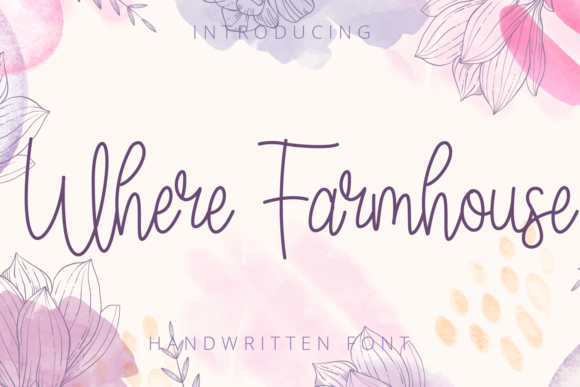
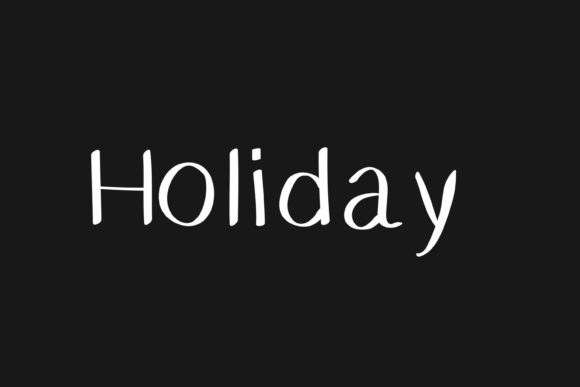
At its heart, Holiday Font is a neat handwritten font. This classification immediately sets expectations: it mimics the organic flow of natural penmanship while maintaining a structured, readable form. Its defining feature is a thin stroke style. Unlike bold or heavy scripts that dominate a layout, this font operates with a delicate, lightweight presence. The letterforms are crafted to feel charming and approachable, aiming to inject a sense of warmth and authenticity into a design.
The design philosophy here is one of subtlety and enhancement. It is not intended to be a workhorse body font or a commanding headline typeface. Instead, it functions as a beautiful script font designed to add cuteness and a handcrafted feel. The consistency of the letterforms is a key strength; while it emulates handwriting, it avoids the erratic spacing and baseline shifts that can make truly casual scripts illegible at small sizes. This makes it a reliable choice for designers who need the aesthetic of handwriting with the predictability of a digital typeface.
Practical Applications and Audience Fit
Understanding where Holiday Font excels requires analyzing its strengths against common design scenarios. Its primary value lies in its ability to convey a specific mood: friendly, personal, and gentle. This makes it particularly effective for projects targeting audiences that appreciate these qualities.
Who benefits most from using Holiday Font?
- Freelancers and Small Business Owners: For creating personalized client communications, thank-you cards, or boutique branding materials where a human touch is paramount.
- Bloggers and Content Creators: Ideal for designing quote graphics, social media posts, or eBook chapter headings that need to feel inspirational and intimate rather than corporate.
- Marketers and Educators: Useful for designing invitations, promotional flyers for community events, or educational materials aimed at younger audiences where a playful, approachable tone is needed.
- Hobbyists and Crafters: A strong asset for DIY projects like scrapbooking, custom stationery, and printable wall art where the "handmade" aesthetic is a goal.
Real-world use cases might include wedding stationery suites, bakery menu boards, lifestyle blog post titles, or branding for a handmade soap company. In each scenario, the font's thin, neat handwritten style communicates care and attention to detail.
Strengths: Usability and Aesthetic Value
From a usability standpoint, Holiday Font scores well within its intended niche. Its thin stroke allows it to layer elegantly over images without creating visual clutter. This is a significant advantage in today's image-heavy digital content. A designer can overlay a quote on a complex photograph, and the font will integrate seamlessly rather than fight with the background for attention.
Furthermore, its charming style is not merely decorative; it is functional in conveying brand personality. For a small business, typography is a silent ambassador. Using Holiday Font in a logo or on packaging can instantly signal that a brand is artisanal, thoughtful, and customer-centric. It performs reliably across standard design software, maintaining its clarity whether used for a short headline or a brief subheading.
The font's ability to create gorgeous designs is tied to its versatility in pairing. It works exceptionally well when contrasted with a clean, geometric sans-serif for body text. This pairing follows established typographic principles, allowing the script to provide flair while the sans-serif ensures readability for longer paragraphs.
Limitations and Professional Considerations
A balanced evaluation must acknowledge constraints. The very characteristic that defines Holiday Font—its thin stroke style—can be a limitation in certain contexts. At very small sizes, such as in footnotes or dense body copy, thin strokes can become difficult to read, particularly on screens with lower resolutions. It is not optimized for extended reading.
Additionally, its "cute" or charming aesthetic, while a strength in many scenarios, may not be appropriate for projects requiring a tone of serious authority, technical precision, or stark minimalism. Using it for a corporate annual report or a legal disclaimer would undermine the intended message. Designers must carefully assess whether the font's inherent personality aligns with the project's core requirements.
Long-term value depends on the project's lifespan. For seasonal campaigns, event-specific materials, or personal creative projects, Holiday Font is an excellent, effective choice. For a company's primary, long-term brand identity, it might be better used as a secondary accent font rather than the primary logo typeface, ensuring the brand can evolve without being tied to a very specific stylistic trend.
Conclusion: A Specialized Tool for Specific Needs
Holiday Font is a well-executed, specialized typographic tool. It is not a universal solution, nor does it pretend to be. Its strength lies in its focused ability to deliver a neat handwritten aesthetic with a thin, elegant stroke. For professionals and creators whose work revolves around conveying warmth, personal connection, and a handcrafted sensibility, it is a valuable addition to a font library.
Its practical value is highest when used intentionally: for headlines, invitations, branding accents, and social media graphics where its charming style can shine without compromising overall design integrity. By understanding its ideal use cases and inherent limitations, designers can leverage Holiday Font to create designs that feel both personal and polished, effectively connecting with their intended audience.