Coddle Font: Retro Playfulness for Modern Design
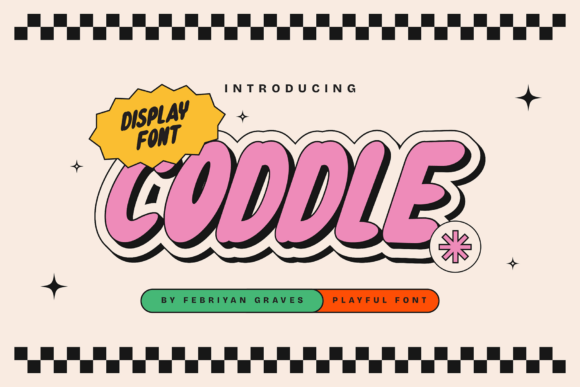
Finding a typeface that genuinely captures energy without sacrificing clarity can be a challenge. Many fonts lean too far into "cute" and become illegible, while others are bold but lack personality. Coddle bridges that gap effectively. It is a display font defined by its chunky letterforms and comic-style aesthetic, offering a distinct retro vibe with the polish required for modern digital and print media.
The Mechanics of the "Cartoonish Pop"
The font’s structure leans heavily on the rounded sans-serif tradition but adds a weight that feels sturdy and confident. It avoids the sharp edges of geometric fonts, which can feel cold or corporate. Instead, the softness of the curves invites the viewer in. This makes it particularly effective for audiences that need to feel welcomed rather than intimidated—think children, families, or consumers looking for lighthearted entertainment.
Strategic Applications for Creators and Brands
- Children’s Education and Publishing: For storybooks or classroom materials, Coddle provides high legibility for early readers. The thick strokes make letters easy to distinguish, which is crucial for educational design. Use it for chapter titles or vocabulary words to make learning feel less like a chore and more like a game.
- Food and Beverage Packaging: The "chunky" aesthetic works surprisingly well for food branding, particularly in the snack, ice cream, or confectionery sectors. It suggests a product that is fun and satisfying. On a label, Coddle can highlight flavors or product names, ensuring the customer sees the key information first.
- Social Media Content: In the fast-scrolling environment of Instagram or TikTok, static text often gets ignored. The 3D illusion in Coddle creates visual friction that stops the thumb. It is excellent for quote graphics, sale announcements, or event headers where you need maximum readability in a fraction of a second.
Designing with Bold Typography: Practical Tips
Contrast is Key: Never pair Coddle with another decorative font. The visual noise would be too high. Instead, pair it with a clean, neutral sans-serif (like Open Sans or Roboto) for body text. The contrast between the playful headline and the serious body copy creates a professional hierarchy that guides the reader's eye naturally.
Whitespace Management: Chunky fonts breathe best when they have room. If you crowd Coddle into a tight box, the curves will touch the edges, making the layout feel claustrophobic. Generous padding and margins allow the font’s playful nature to shine without looking messy.
Color Psychology: Coddle is a "happy" font, so it pairs best with vibrant, saturated colors. Think electric blues, warm oranges, or bright mints. While it can work in black and white, the font truly comes alive when you utilize color blocking. Consider using a bright fill color with a slightly darker stroke to enhance the 3D effect even further.
Specific Use Cases and Inspiration
- Retro Event Flyers: If you are designing a poster for a local carnival, a 90s-themed party, or a community fair, Coddle captures that nostalgic energy perfectly. Pair it with halftone textures or vintage color palettes (mustard yellow, teal, burnt orange) to complete the aesthetic.
- Merchandise and Apparel: T-shirt slogans need to be readable from a distance. Coddle’s thick strokes ensure that a message on a shirt is instantly recognizable. It works particularly well for "dad hats," tote bags, and youth apparel where the tone is casual and fun.
- Digital Stickers and UI Elements: For app designers or digital planner creators, Coddle can be used to create custom stickers or UI buttons. Its distinct look makes interactive elements feel tangible and rewarding to tap.
Adapting Coddle for Different Audiences
Maintaining Legibility and Hierarchy
The most common mistake with display fonts is using them for body text. Do not use Coddle for paragraphs. The weight and stylistic nature of the letters will cause eye strain over long passages. Reserve it strictly for:
- H1 and H2 Headlines
- Call-to-Action buttons (e.g., "Buy Now," "Learn More")
- Logo lockups
- Short, punchy slogans
Conclusion: Bringing Joy to the Page