The Essential Guide to Little Pat 1: The Adaptable Sans Serif Font for Modern Creatives
In the vast universe of typography, finding a font that balances simplicity with versatility is often the holy grail for designers, crafters, and brand builders alike. We often look for typefaces that can do it all—something that looks professional on a business card yet playful on a birthday invitation, or clean on a website header yet readable on a product label. Enter Little Pat 1, a simple and adaptable sans serif font designed to meet the diverse needs of the modern creative landscape. Whether you are a seasoned graphic designer or a hobbyist looking to elevate your DIY projects, understanding how to leverage this typeface can significantly improve the quality of your visual communication.
Understanding the Anatomy of Little Pat 1
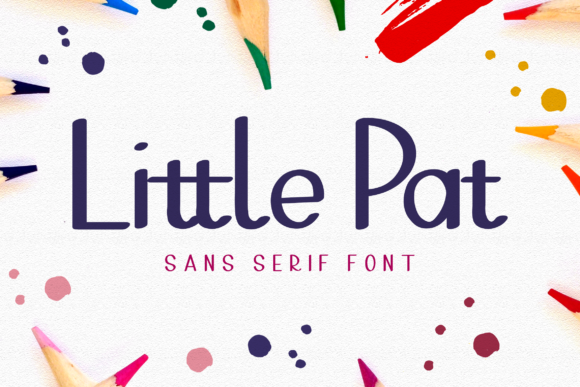
Before diving into specific applications, it is essential to understand what makes Little Pat 1 tick. At its core, Little Pat 1 is a sans serif typeface. For those new to typography, "sans serif" is a French term meaning "without serif." Serifs are the small decorative strokes added to the end of a letter's main strokes. Fonts like Times New Roman or Georgia are serif fonts, characterized by these "feet" and "tails." Sans serif fonts, such as Helvetica, Arial, and our subject, Little Pat 1, lack these embellishments.
The absence of serifs gives Little Pat 1 a clean, modern, and uncluttered appearance. This design choice is not merely aesthetic; it serves a functional purpose. Sans serif fonts are generally easier to read on digital screens, especially at lower resolutions, because the lack of extra details prevents the letters from blurring together. However, Little Pat 1 distinguishes itself by being described as "simple" and "adaptable." This suggests that while it maintains the cleanliness of the sans serif category, it likely avoids the rigidity of geometric or industrial fonts. Instead, it likely offers a friendly, approachable vibe that makes it suitable for a wide array of contexts, from corporate branding to whimsical crafting projects.
Why Typography Matters in Creative Projects
It is a common misconception that fonts are merely a vessel for words—that as long as the text is legible, the font choice is irrelevant. This could not be further from the truth. Typography is the voice of your design. Just as the tone of your voice changes the meaning of spoken words, the style of a font changes the perception of written text. A heavy, black letter might convey authority and seriousness, while a light, airy script might suggest elegance or femininity.
When you choose Little Pat 1, you are choosing a voice that speaks of clarity, adaptability, and contemporary style. In a world oversaturated with visual noise, simplicity often cuts through the clutter. By using a font that is easy to process, you respect your audience's time and cognitive load, allowing them to focus on your message rather than struggling to decipher the letters.
Elevating Handmade Cards and Paper Crafts
One of the most popular applications for adaptable fonts is in the world of paper crafting. Creating handmade cards, scrapbooks, and paper decorations is a tactile art form that relies heavily on visual harmony. Little Pat 1 shines in this arena due to its adaptability.
Imagine you are designing a handmade birthday card. If you use a complex, ornate script for the entire message, the card might look cluttered and difficult to read. Conversely, using a standard, boring computer font might make the card look generic. Little Pat 1 offers the perfect middle ground. Its clean lines provide excellent readability for the main message, such as "Happy Birthday," while its simple character ensures it doesn't overpower the decorative elements like ribbons, stickers, or watercolor backgrounds you might have added.
- Layering: Because Little Pat 1 is a sans serif, it layers beautifully over busy patterned paper without creating visual conflict.
- Color Pairing: The font's simplicity makes it easy to pair with bold colors. You can print it in a vibrant red or a deep navy blue, and it will maintain its legibility and charm.
- Versatility in Occasions: It works for serious occasions like sympathy cards (using a spaced-out, lighter weight) and fun occasions like holiday invitations (using a bolder weight).
Building a Strong Brand Identity
Moving from personal crafting to professional applications, the significance of font choice in branding cannot be overstated. Your brand identity is the visual representation of your business's personality. Little Pat 1 is an excellent candidate for modern branding, particularly for startups, lifestyle brands, and tech companies.
A brand needs a font that is scalable. This means the font must look good whether it is the size of a billboard or the size of a favicon in a browser tab. Complex fonts often lose their detail when scaled down, becoming illegible. Little Pat 1, with its clean sans serif structure, scales effortlessly.
Logo Design
When creating a logo, legibility is paramount. If a potential customer cannot read your brand name instantly, you have lost a marketing opportunity. Little Pat 1 provides a solid foundation for logo design. It can be used as the primary font for a wordmark logo (a logo that is just text), or it can be paired with a symbol or icon. Its "simple" nature allows it to blend seamlessly with various design elements, whether you are going for a minimalist aesthetic or a more illustrative approach.
Marketing Materials
Consider the various touchpoints where your customers interact with your brand: websites, social media posts, email newsletters, brochures, and business cards. Little Pat 1 ensures consistency across all these platforms. Because it is adaptable, you can use it for headings on your website and body text in your brochures without the design feeling disjointed. This consistency builds trust and professionalism.
Labels and Packaging: The Retail Advantage
In the retail environment, packaging is a silent salesperson. The font on your product label has a split second to grab a shopper's attention and communicate what the product is. Little Pat 1 is particularly effective for product labels, especially in the food, cosmetics, and artisanal goods sectors.
Clarity is the number one priority for labels. A customer needs to know if they are picking up "Tomato Sauce" or "Tomato Soup." Little Pat 1’s clear letterforms eliminate ambiguity. Furthermore, its adaptability allows it to take on different characters based on the surrounding design elements.
- Organic Products: When paired with earth tones and kraft paper textures, Little Pat 1 can look wholesome and natural.
- Modern Tech: When placed on sleek, metallic packaging with minimalist graphics, the same font can look futuristic and high-tech.
- Children’s Products: Due to its simplicity, it is often easier for children who are learning to read to recognize letters in a sans serif font like Little Pat 1 compared to a cursive script.
Digital Applications: Web Design and Social Media
We live in a digital-first world, and the requirements for digital typography are strict. Fonts must be web-safe, fast-loading, and legible on high-resolution Retina screens as well as older monitors. While the specific file format of Little Pat 1 would determine its technical web performance, its design philosophy makes it ideal for digital use.
On social media platforms like Instagram and Pinterest, visual content is king. Text overlays on images need to be readable instantly as users scroll through their feeds. Little Pat 1 serves this purpose perfectly. It provides a professional look to quotes, announcements, and sale graphics without distracting from the imagery behind it.
Furthermore, in UI (User Interface) design, simplicity is a virtue. Buttons, menus, and navigation bars require fonts that are functional. Little Pat 1 fits the bill for creating a user-friendly interface where the focus should be on the user experience rather than the decorative aspects of the text.
Practical Tips for Using Little Pat 1
To get the most out of Little Pat 1, it helps to understand a few basic design principles. Even the best font can look bad if used incorrectly.
Pairing Fonts
Rarely does a design use only one font. Pairing Little Pat 1 with a complementary font can create visual interest and hierarchy. Since Little Pat 1 is a simple sans serif, it pairs exceptionally well with serif fonts or script fonts.
- The Classic Combo: Use a serif font for headings (e.g., "The Wedding of Jane and John") and Little Pat 1 for the body details (e.g., "Location, Date, Time"). This creates a sophisticated contrast.
- The Modern Combo: Use a handwritten or brush script font for a decorative accent word, and use Little Pat 1 for the supporting text. This keeps the design grounded and readable.
Hierarchy and Spacing
When designing, you must guide the reader's eye. Use Little Pat 1 in different sizes and weights (bold, regular, light) to create a hierarchy. Make the most important information the largest and boldest. Also, pay attention to tracking (the space between letters) and leading (the space between lines). Because Little Pat 1 is a simple font, increasing the tracking slightly can give your design a luxurious, high-end feel, while standard tracking keeps it feeling compact and efficient.
Conclusion: The Power of Simplicity
In conclusion, Little Pat 1 is more than just a collection of letters; it is a tool for effective communication. Its definition as a "simple and adaptable sans serif font" is its greatest strength. In a complex world, clarity is a gift. By incorporating Little Pat 1 into your favorite creations—be it a heartfelt handmade card, a rigorous corporate branding guide, or a clear product label—you are choosing a path of elegance and efficiency.
Don't be afraid to experiment. Add it confidently to your design toolkit. You may be surprised at how a single font choice can unify your work, making it look more professional, more readable, and ultimately more impactful. Let yourself be amazed by the outcome generated when simplicity meets creativity.