Strategic Application of the Font Fishing Typeface
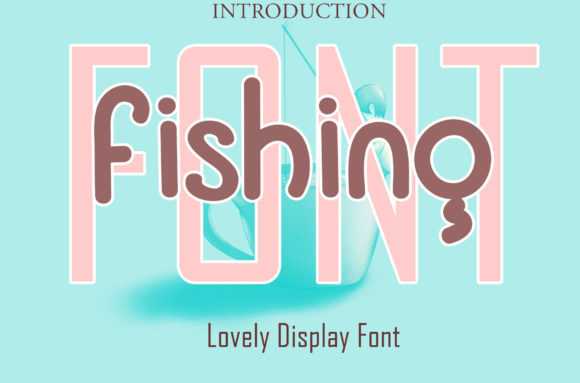
In the realm of digital design and branding, typography is rarely just about legibility; it is a primary vehicle for personality and emotional resonance. While professional environments often default to the safety of Helvetica or the authority of Times New Roman, there are distinct moments where a more specialized tool is required. Font Fishing, a whimsical and joyful display font, represents a specific strategic asset for creators, marketers, and educators. It is not merely a collection of cartoonish letters; it is a communication device designed to evoke delight, imagination, and playfulness. For the discerning professional, understanding when and how to deploy Font Fishing is a matter of aligning visual language with specific communication goals.
Understanding the Psychology of Playful Typography
Before integrating Font Fishing into your toolkit, it is essential to understand the psychological impact of display fonts that lean toward the playful. Typography carries connotations; sharp, geometric sans-serifs suggest efficiency and modernity, while ornate serifs imply tradition and luxury. Font Fishing, with its fluid lines and joyful aesthetic, triggers associations with childhood, creativity, and approachability. For an entrepreneur or marketer, this is a powerful lever. When you use Font Fishing, you are signaling to your audience that the environment you are creating is low-pressure and high-fun.
However, this psychological trigger must be managed carefully. If your goal is to establish immediate corporate authority or convey urgent, serious data, Font Fishing is the wrong choice. Its strength lies in disarming the viewer. In educational contexts, for example, a teacher might use Font Fishing for materials aimed at younger students to reduce anxiety around learning new concepts. In marketing, a brand might use it to soften the hard edges of a sales pitch, making the customer feel like they are engaging in a fun activity rather than a transaction. The strategic value of Font Fishing lies in its ability to lower cognitive barriers.
Strategic Deployment: When and Where to Use Font Fishing
The decision to use Font Fishing should be driven by context and audience analysis. It is a display font, meaning it is best suited for headlines, logos, and short bursts of text rather than long-form body copy. Its utility is highest in scenarios where capturing attention and establishing a specific mood is more important than formal readability.
1. Branding for Niche Markets
For small business owners and freelancers, differentiation is key. If you operate in the children’s entertainment sector—whether as a party planner, a tutor, or a game developer—Font Fishing can serve as a cornerstone of your visual identity. It communicates that your service is tailored for enjoyment. However, consider the longevity of the brand. If you plan to scale into corporate B2B services later, anchoring your entire identity in a whimsical font might create a disconnect down the road. Use Font Fishing for specific product lines or sub-brands where "fun" is the primary value proposition.
2. Content Marketing and Social Media
In the fast-scrolling environment of social media, stopping power is vital. Marketers and bloggers can use Font Fishing in thumbnails, Instagram stories, or promotional graphics to break the monotony of standard corporate fonts. It works exceptionally well for announcements that are meant to be celebratory, such as giveaways, holiday sales, or community milestones. The font acts as a visual cue that the content requires a lighter, more enthusiastic engagement from the viewer.
3. Educational and Gamification Materials
Educators and course creators often struggle with engagement. By using Font Fishing for headers in worksheets, progress trackers, or achievement badges, you introduce an element of gamification. This is not just for children; adult learners in creative fields or hobbyist communities respond well to environments that feel less rigid. It suggests that the learning process is an adventure, aligning with the "fishing" metaphor of exploring and discovering new ideas.
Practical Application: Integrating Font Fishing into Your Workflow
Using a whimsical font effectively requires a disciplined approach to layout and pairing. Because Font Fishing has a strong personality, it can easily overwhelm a design if not handled with restraint. Here is a practical guide to implementation:
- Pairing with Neutral Fonts: Never use Font Fishing for body text. It is difficult to read in long paragraphs and will fatigue the reader. Instead, pair it with a clean, neutral sans-serif (like Open Sans or Roboto) for the body copy. This creates a hierarchy where the whimsy of Font Fishing draws the eye to the key message, while the neutral font provides the supporting details.
- Color Psychology: Font Fishing pairs best with bright, saturated colors or soft pastels. Avoid pairing it with stark black-and-white high-contrast schemes, which can make the font look jagged or harsh. Soft blues, greens, and yellows complement the "fishing" and nature-inspired aesthetic of the typeface.
- Spacing and Sizing: Display fonts often require generous leading (line spacing) and tracking (letter spacing). Because Font Fishing has a distinct shape, letters can sometimes collide or look cramped. Adjust your kerning to ensure the text feels airy and open, reinforcing the feeling of joy and freedom.
- Contextual Relevance: Ensure the surrounding imagery supports the font's vibe. If you use Font Fishing for a headline about "Financial Audits," the cognitive dissonance will confuse your audience. It should be paired with illustrations, photography, or icons that share a playful or creative aesthetic.
Avoiding the Pitfalls: Risks of Misapplication
While Font Fishing is a valuable tool, it carries risks if used without clear strategic intent. The most significant danger is tonal dissonance. If you are a professional services firm (e.g., law, accounting, heavy machinery), using Font Fishing can undermine your credibility. It may signal to potential clients that you are not serious about your work, even if that is not the case.
Another risk is over-saturation. If you use Font Fishing for every single piece of communication, the "whimsy" wears off. It loses its power to delight and starts to feel repetitive or annoying. Use it sparingly for high-impact moments. Think of it as a spice rather than the main ingredient. Furthermore, be mindful of accessibility. The unique letterforms of display fonts can sometimes be difficult for individuals with dyslexia or visual impairments to decipher. Always ensure that critical information is available in a highly legible format, and use Font Fishing primarily for decorative or non-essential headlines where the meaning is also conveyed through the body text.
Long-Term Value and Creative Consistency
For creators and publishers, building a recognizable style is part of a long-term strategy. If you decide that "playful" and "approachable" are core to your brand values, Font Fishing can become a signature element. However, consistency is key. If you use Font Fishing on your website header, consider using it on your email newsletter graphics or your product packaging to create a cohesive ecosystem.
This consistency helps in building brand equity. When your audience sees the distinct loops and curves of Font Fishing, they should immediately associate it with the positive feelings your brand evokes—fun, creativity, and accessibility. This is particularly useful for hobbyists and community builders. Whether you are running a Dungeons & Dragons campaign, a crafting circle, or a children's storytelling blog, the font becomes a shorthand for the community's culture.
Conclusion: The Joy of Intentional Design
Font Fishing is more than just a cartoon font; it is a strategic choice for those who wish to inject humanity and joy into their digital presence. It serves as a reminder that business and education do not always have to be stiff and formal. By using Font Fishing intentionally—pairing it wisely, deploying it in the right context, and respecting its limitations—you can create experiences that resonate deeply with your audience. For the entrepreneur, the educator, or the creator, it offers a way to stand out not just by being loud, but by being genuinely delightful.