Reviving the Digital Past: How Paxalah Arabic Font is Redefining Modern Typography
In the rapidly evolving landscape of digital design, the intersection of heritage and technology often yields the most compelling visual narratives. As professionals and creators seek to distinguish their brands in a saturated market, the tools they use must offer more than just functionality; they must offer a story. This is where the Paxalah Arabic Font enters the conversation, not merely as a typeface, but as a bridge between the golden age of 8-bit computing and the rich, flowing tradition of Arabic calligraphy. By understanding the nuances of "Paxalah"—a term derived from the Arabic slang for pixelation—designers and marketers can unlock a fresh aesthetic that resonates with both retro enthusiasts and modern minimalists.
Understanding the Paxalah Concept
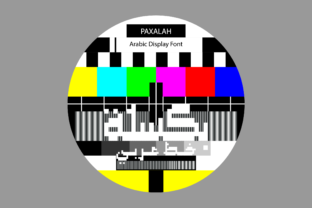
To appreciate the value of Paxalah, one must first understand the terminology. The word "Paxalah" (or "Bakhala" depending on dialect) refers to the visual artifact of pixelation—the jagged edges and visible squares that occur when a digital image is stretched beyond its resolution. While traditionally viewed as a technical flaw, the Paxalah Arabic Font reclaims this aesthetic as a deliberate design choice. It is an Arabic display font that embraces the grid-based logic of early video games and computer interfaces.
Unlike traditional Arabic scripts that rely on cursive connections and fluid strokes, Paxalah breaks the letters down into their constituent pixels. This creates a unique visual tension: the organic flow of the Arabic language is constrained within the rigid, geometric grid of digital memory. For the modern creator, this represents a powerful tool for visual storytelling. It allows for the integration of Arabic text into environments that might otherwise clash with traditional calligraphy, such as retro-themed gaming interfaces, tech startups, or cyberpunk-inspired advertising.
The Cultural Shift: Why Pixelation Matters Now
We are currently witnessing a significant counter-movement in design trends. As high-definition screens and photorealistic rendering become the standard, a growing segment of the market is looking backward. The resurgence of 8-bit aesthetics is not just about nostalgia; it is a reaction against the over-polished, sometimes sterile nature of modern UI/UX design.
Professionals in branding and advertising are recognizing that "imperfection" can be a brand asset. The Paxalah Arabic Font fits perfectly into this shift. It signals authenticity and a connection to the "maker" culture of early computing. For entrepreneurs and freelancers, using Paxalah is a way to say, "We understand the roots of digital culture." It humanizes the technology, suggesting a handcrafted quality that resonates with audiences tired of algorithm-generated perfection.
Furthermore, the gaming industry and the rise of the metaverse have normalized pixel art as a legitimate, high-value aesthetic. As these sectors expand into the MENA (Middle East and North Africa) region, the demand for localized content that fits these visual worlds is skyrocketing. Paxalah provides a native solution for Arabic-speaking gamers and digital natives, ensuring that the language feels integrated into the digital environment rather than pasted on top of it.
Practical Applications for Modern Workflows
For the designer or marketer, the utility of a typeface is defined by its versatility. While Paxalah Arabic Font is a display font with a distinct personality, its applications are surprisingly broad when viewed through the lens of contemporary trends.
1. Branding for Tech and Startups
Tech startups, particularly those in the SaaS (Software as a Service) or blockchain space, often seek to convey innovation and disruption. A traditional serif or a standard sans-serif can feel too corporate or generic. Paxalah offers a solution that is inherently "digital." It is ideal for logos, app splash screens, and landing page headers where the goal is to immediately establish a connection to technology. For a startup aiming to appear agile and forward-thinking, the pixelated aesthetic of Paxalah aligns with the language of code and algorithms.
2. Advertising and Social Media Engagement
On platforms like Instagram, TikTok, and Twitter, attention is the currency. The scroll-stopping power of a unique font cannot be overstated. The visual distinctiveness of the Paxalah Arabic Font creates an immediate pattern interrupt. It breaks the visual monotony of standard feed content. Marketers can leverage this font for call-to-action buttons, promotional banners, and event posters. Its blocky nature ensures legibility at small sizes, making it highly functional for mobile-first content strategies.
3. Editorial and Print Design
While it is a digital-native concept, Paxalah translates effectively into print, particularly in editorial design. Magazine covers, zines, and book covers focusing on themes of technology, youth culture, or futurism benefit from the texture Paxalah provides. It adds a layer of tactile grit to a printed page. When used for pull quotes or drop caps in a magazine layout, it draws the eye and anchors the reader in a specific aesthetic mood. It proves that a font inspired by screen pixels can have a strong presence in the physical world.
Aligning with Changing Consumer Expectations
Today's consumer, particularly the Gen Z and Millennial demographics, values authenticity and relatability over polished perfection. They are digital natives who view the 8-bit era with a romantic lens. The Paxalah Arabic Font taps into this sentiment by offering a visual language that feels familiar yet distinct.
There is also a growing appreciation for "Glocalized" design—global trends adapted for local contexts. The pixel art style is a global phenomenon, but applying it to the Arabic script requires a sensitive understanding of letter forms and legibility. Paxalah succeeds because it does not merely square off the letters; it reinterprets the structure of the script. It respects the connectivity of Arabic letters while adapting them to a grid system. This thoughtful localization is crucial for brands operating in the region who want to appear globally aware but locally rooted.
Technical Considerations for Designers
When integrating Paxalah Arabic Font into a workflow, technical precision is key. As a display font, it is not intended for long-form body copy. Its strength lies in headlines and large-scale typographic compositions.
- Legibility: Because pixel fonts rely on distinct shapes, designers must ensure adequate contrast against the background. The "aliasing" effect (the jagged edges) requires clean backgrounds to remain readable.
- Scaling: Unlike vector fonts that scale infinitely, pixel fonts often look best at specific multiples of their base resolution. However, modern interpretations like Paxalah are often vectorized to allow for smooth scaling while retaining the pixel aesthetic.
- Pairing: To avoid visual overload, Paxalah should be paired with a clean, modern sans-serif for body text. This creates a hierarchy that guides the reader's eye, using the Paxalah font for impact and a standard font for information delivery.
The Business Case for Distinctive Typography
For freelancers and agencies, recommending a font like Paxalah is an opportunity to add value. It demonstrates a willingness to explore beyond the "safe" options and a keen eye for emerging trends. In a competitive market, the ability to propose a unique visual identity—anchored by a font like Paxalah Arabic Font—can be the deciding factor in winning a pitch.
Moreover, as the digital economy in the Arab world continues to boom, there is a high demand for localized digital assets. The scarcity of high-quality, stylistically diverse Arabic fonts means that adopting a distinctive option like Paxalah can give a brand a significant competitive advantage. It allows businesses to own a specific visual niche—the intersection of heritage and high-tech.
Conclusion: Embracing the Pixelated Future
The Paxalah Arabic Font is more than a stylistic choice; it is a reflection of how we perceive technology and language today. It acknowledges that our digital tools have a history, and that history can be beautiful. By embracing the "flaw" of pixelation, designers and creators can craft experiences that feel grounded, authentic, and uniquely modern.
Whether you are designing a logo for a tech startup, creating a poster for a gaming convention, or simply looking to add a retro-futuristic flair to your portfolio, Paxalah offers a robust solution. It stands as a testament to the enduring power of 8-bit graphics and the versatility of the Arabic script. As we move further into a digital-first future, fonts like Paxalah remind us that the best design often comes from looking at the pixels—up close.